
Myanmar Traditional Toys : Forgotten memories of the childhood days

Nowadays, kids are immersed in phones and computers, and many barely remember the joy of playing with physical toys. If you're feeling nostalgic like I am or curious about the toys we used to play with back in the day, this blog is for you! I've put together a list of Myanmar's traditional toys and how we enjoyed them during our weekends and summer holidays.

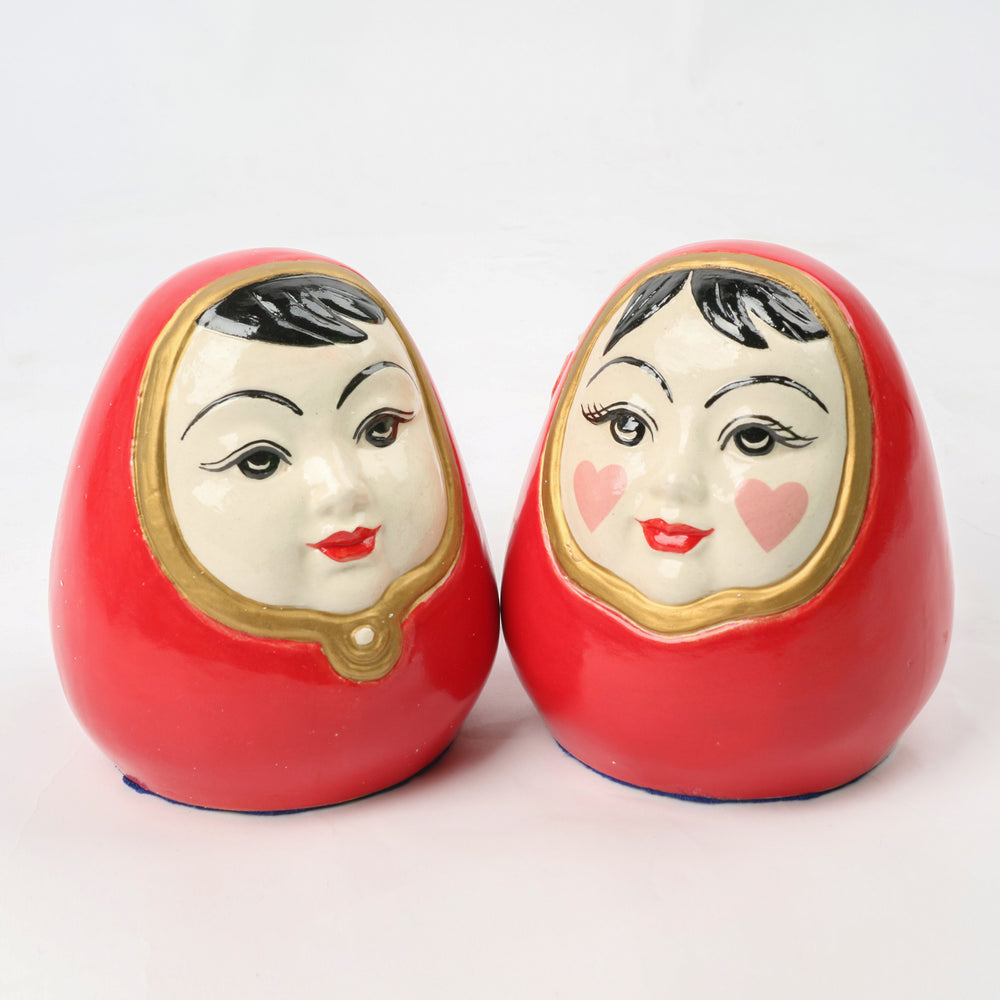
1. Pyit Taing Htaung (Tumbling Toy)

The direct translation of this toy's name is "upright whenever thrown down". The "pyit-taing-htaung" is a type of tumbling toy which has a weigh inside the bottom to make it stand upright whenever it's thrown onto the floor. In Myanmar culture, this toy represents resilience, courage and the spirit of never giving up. The toy is typically made from wood and comes in various sizes, shapes, and designs, but usually they all have a human smiling face at the front and is shaped like an egg.
2. Pa Lote Tote (Pellet Drums)

This toy is popular throughout Asia, especially among toddlers, back in the days. You roll the stick back and forth in your palms and the stringed pellets will hit the drum in the middle to make a catchy drumming sound. You can usually find these in pagoda festivals (payar pwal) where street vendors sells little handmade toys to attract the crowd.

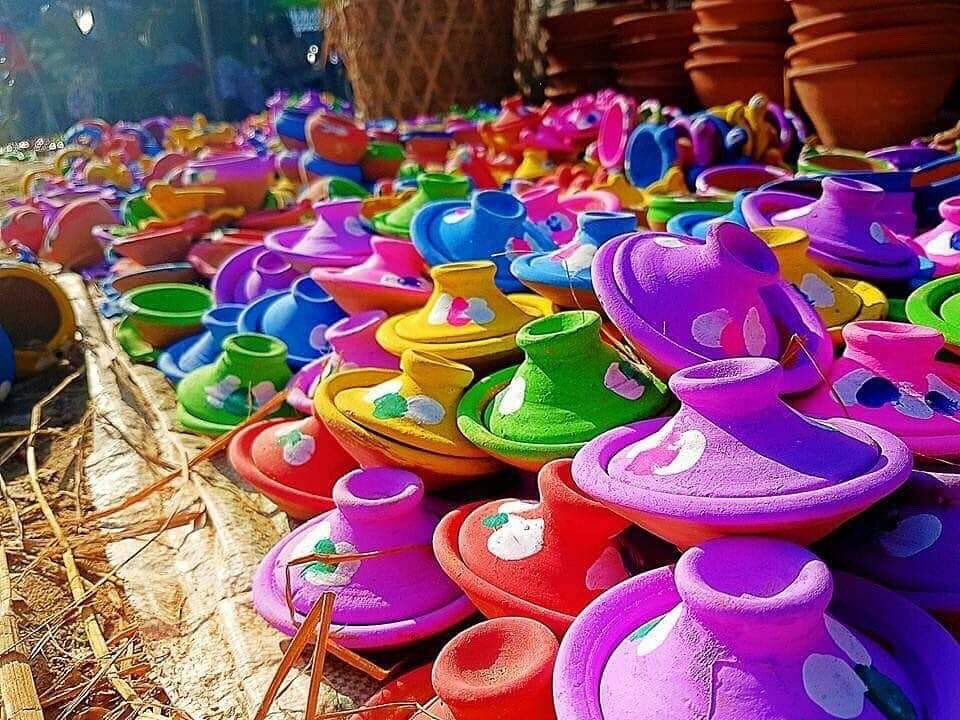
3. Oh Pote (Clay Pot Toy)

Have you ever picked flowers and herbs, pound them with a rock and arrange them nicely on a leaf plate to pretend you're having a feast? This kind of play-pretend is quite popular back in the days and we even have colourful little clay pots to cook meals with your friends. The best part? You can actually heat them up with fire and boil whatever you want but they are quite fragile so make sure the kids don't drop them while they're playing with these Oh Pote!  
4. Yote Thay Yote (Puppets (or) Marionettes)
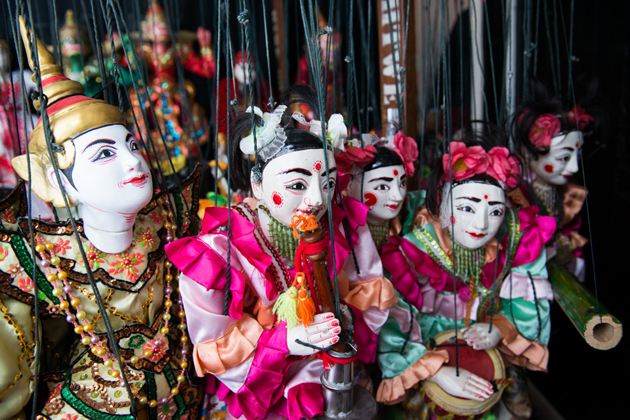
 In Myanmar, there're still a lot of professional puppeteers thriving in the theatre business. Some wealthy families used to buy this kind of puppets as a toy for their kids to play back in the days. The puppets are usually replicas of Myanmar's mythical creatures and are colourfully decorated with extravagant clothes. If you visit Bagan, you'll see a lot of vendors selling Burmese Puppets and they're pretty nice-looking souvenirs to bring back to your home!


Comments

Popular posts from this blog

Learn Burmese : 2025's most used Burmese slangs for everyday conversations! (With Examples)

Burmese Slangs (မြန်မာ ဘန်း/ဗန်းစကားများ) Slang words are informal terms or phrases that are commonly used in certain social situations or by specific groups of people. You can hear them being used almost everywhere! For example, someone might have told you to 'keep your cool' during an important meeting. Burmese Slang is very different from regular Burmese and often breaks traditional language rules. It is always changing and evolving – some slang words fall out of use, and new ones emerge each year. At first glance, many slang terms might seem confusing because their purpose is to create a group of people who understand the slang (such as teenagers), while others, like parents or teachers, may not. However, with the right context, slang can be a great way to express yourself. Using slang properly can help you speak Burmese more fluently and confidently. 2025 Top 10 Most Used Burmese Slangs  To help you understand slang and the situations in which using it may be appropriate, ...

Learn Burmese with Flashcards: Master the Basics (Alphabets & Numbers)

Unlock the beauty of the Burmese language with our interactive flashcards ! Whether you're a beginner or looking to improve your skills, our collection of flashcards will help you learn and remember basic Burmese characters easily! Overview The Burmese alphabet , also known as the Myanmar script , is the writing system used for the Burmese language. It has a unique and elegant appearance, with rounded characters that are distinct from many other Southeast Asian scripts. The Burmese language has 33 consonants (alphabets) , which form the foundation of most words. These consonants represent basic sounds that combine with vowels to create syllables. Practice First, take a look at the below list of Burmese alphabets and try to make yourself familiar with the shapes and pronunciations. If you don't know how to pronounce them yet, check out this post with all the audios . Once you're ready, you can start browsing through the flashcards and test your memory!  And don't pe...

The Basics : Counting in Burmese Numerics

When you learn Burmese, studying the basic is the most crucial steps.  In this blog, I've listed out the numbers in Burmese and how to pronounce them plus some examples for you to read through. It isn't difficult at all as it follows a pattern after 1-10!  Burmese numbers: 0 to 10 English Burmese Myanglish One ၁ tit Two ၂ nit Three ၃ thone Four ၄ lay Five ၅ ngar Six ၆ chout Seven ၇ khon / khon-nit Eight ၈ shit Nine ၉ koe Ten ၁၀ tit-sal People usually confuse the One and Two since it sounds a little similar. But once you have a hang of it, it's pretty easy. "One" has the very obvious 'T' sound and "Two" starts with the 'N' sound. Listen carefully and you'll hear the difference!  One more thing you need to take note is that number S even is a littl...